Spicy Tuna Roll Recipe

on Sep 28, 2020, Updated Feb 24, 2026
My family has requested this spicy tuna roll recipe almost every weekend for the last three years — and after making it dozens of times, I’ve figured out exactly what makes it work. The secret is slicing the tuna into strips — it gives each piece a satisfying bite and holds the sauce perfectly once you toss it. Once you nail that, you’ll never order it out again.
This recipe uses sashimi-grade tuna, mayo, and sriracha — simple ingredients that come together in about 30 minutes once your sushi rice is ready. I’ll walk you through every step, including how to roll it without a bamboo mat if you don’t have one.
If you love this roll, try my Boston Roll, Dragon Roll, or Spicy Salmon Roll next. And if you want to take your spicy tuna roll to the next level, finish each piece with a dollop of my homemade tobiko sauce — it adds a gorgeous pop of color and ocean-fresh flavor.
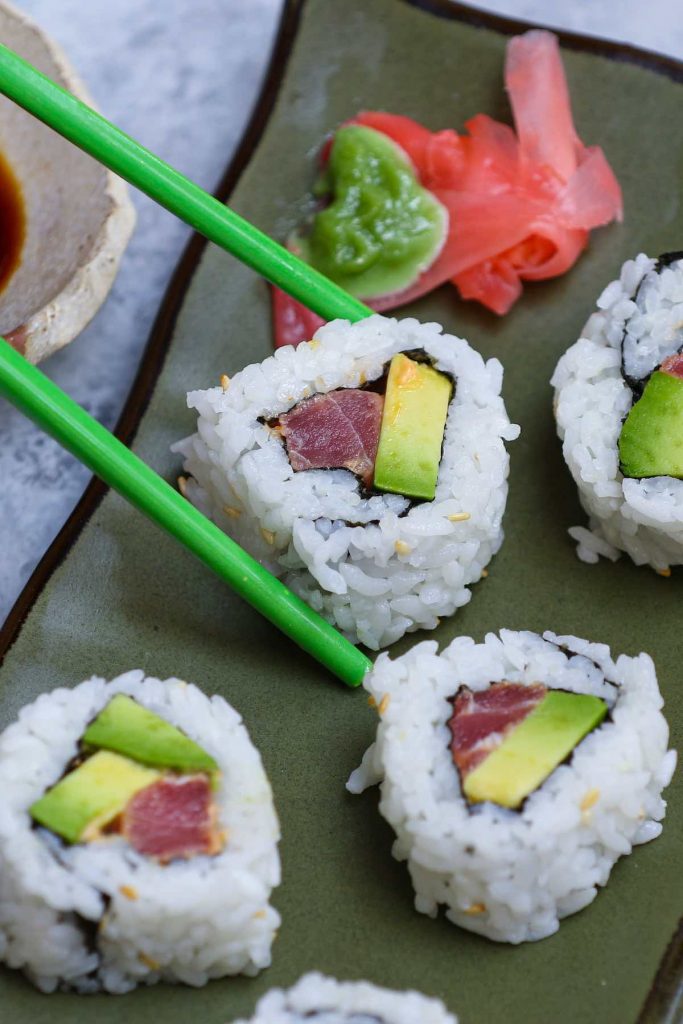
What Is a Spicy Tuna Roll?
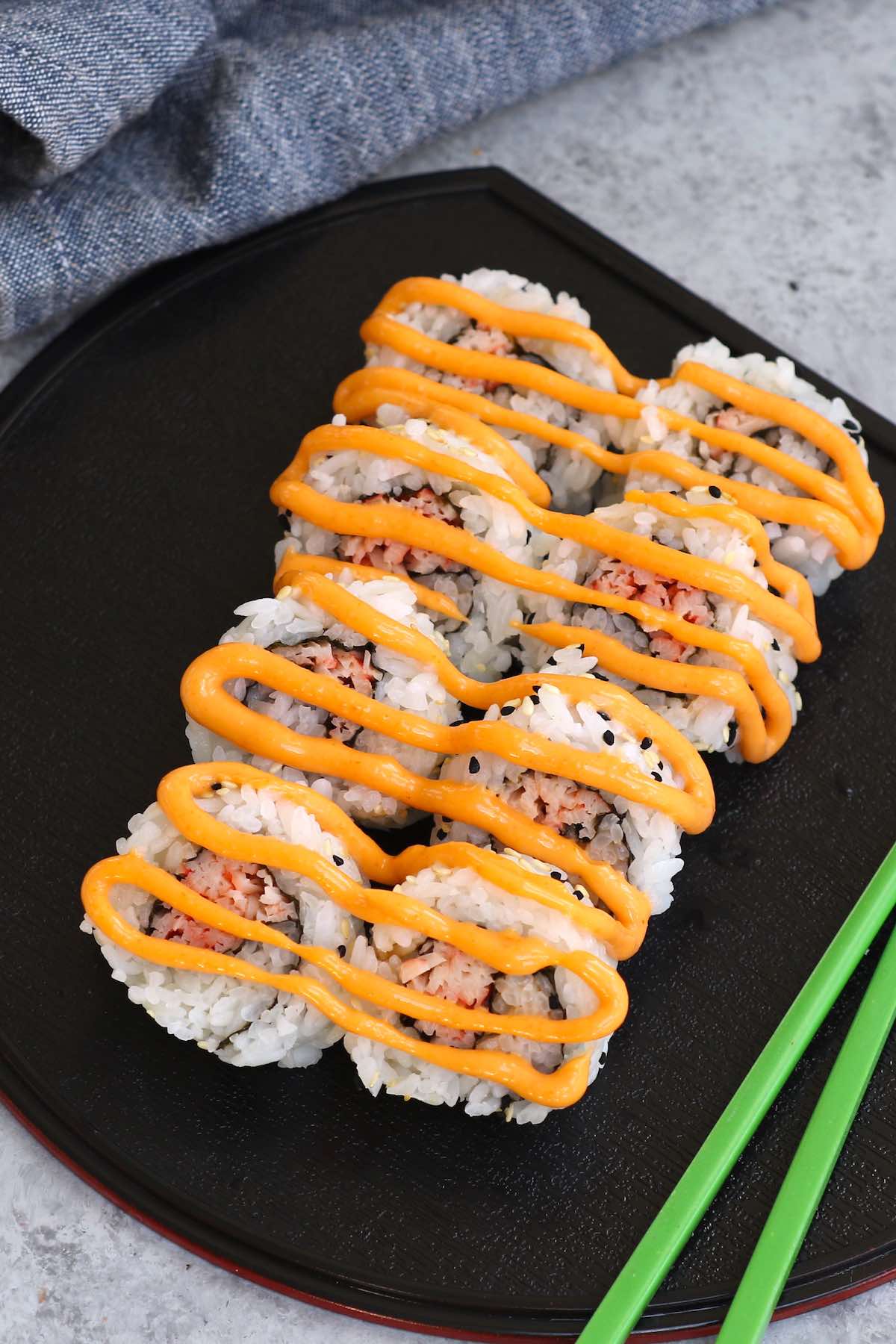
A spicy tuna roll is an American-style sushi roll — one of the most popular at Japanese restaurants in the US. It’s an “inside-out” roll (uramaki), meaning the seasoned sushi rice is on the outside, covering the nori seaweed sheet. The filling is raw, sashimi-grade tuna, sliced into strips and tossed with sriracha sauce and spicy mayo, often with sliced avocado or cucumber for creaminess.
Unlike traditional Japanese Tekkamaki (a simple tuna hosomaki with rice inside), the spicy tuna roll is thicker, richer, and saucier. It was created in Los Angeles in the 1980s and has been a staple of American sushi menus ever since. I first made this at home after realizing restaurant portions are never enough — and honestly, the homemade version is better because you can dial the heat exactly to your liking.
Choosing Your Tuna
The most important ingredient in a spicy tuna roll is the tuna — and not just any tuna will do. You need sashimi-grade (also sold as “sushi-grade”) tuna, which means it has been handled and frozen to FDA-recommended standards for safe raw consumption. I always buy mine from a reputable fishmonger or Asian grocery store and ask specifically for yellowfin or ahi tuna.
- Yellowfin tuna (Ahi): The most widely available choice — clean, mild flavor with a firm texture. This is what most restaurants use.
- Bigeye tuna: Slightly fattier than yellowfin, with a richer flavor. A great option when you can find it.
- Bluefin tuna: The premium option, prized for its high fat content and buttery texture. Much more expensive and harder to source sustainably.
If fresh sashimi-grade tuna is hard to find locally, look for individually vacuum-sealed frozen tuna steaks — very low-temperature freezing kills parasites and makes frozen sashimi-grade tuna a safe, affordable option. Thaw overnight in the refrigerator, never at room temperature.
Ingredients You’ll Need
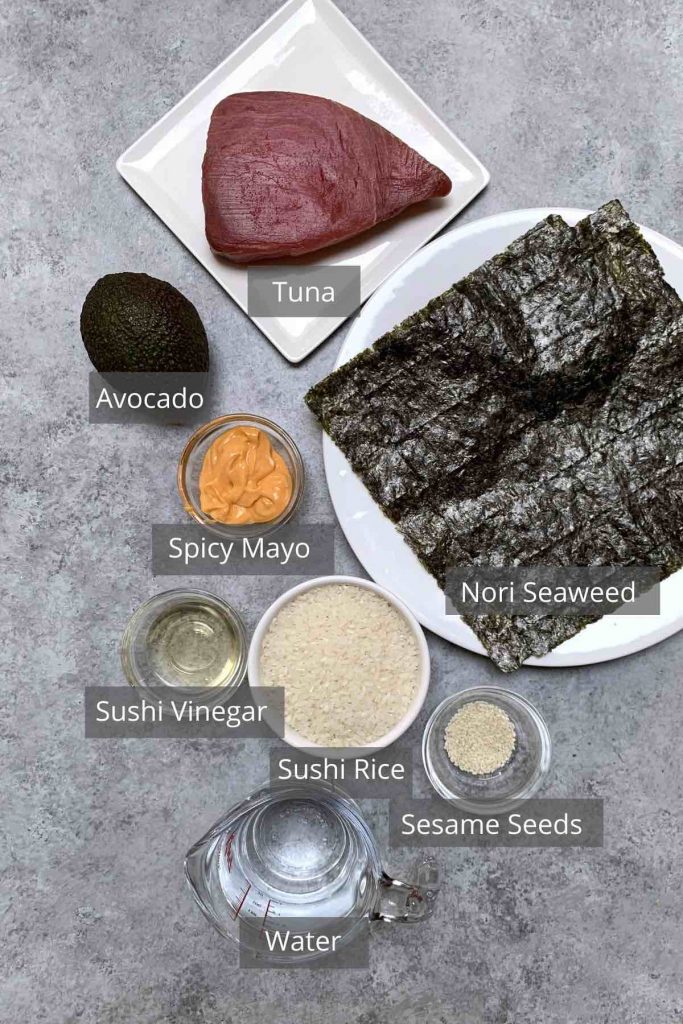
- Sashimi-grade tuna — The most important ingredient. Buy it from a Japanese grocery store or a trusted fish market that labels it safe for raw consumption. Yellowfin (ahi) tuna works best for its mild flavor and firm texture.
- Sushi rice — Short-grain Japanese rice seasoned with rice vinegar, sugar, and salt. Properly seasoned rice is the foundation of any good sushi roll.
- Nori seaweed sheets — Use full sheets and cut in half crosswise for each roll.
- Sriracha sauce — Adds the signature heat. Adjust to your spice tolerance.
- Spicy mayo — A mix of Japanese mayonnaise (Kewpie) and sriracha. Kewpie is richer and tangier than regular mayo and makes all the difference.
- Avocado — Adds creaminess and balances the heat. Choose a ripe avocado that’s slightly soft but not mushy.
- Sesame seeds — Sprinkled on the rice for texture and visual appeal.
- Sesame oil (optional) — A few drops in the tuna mixture adds a toasty, nutty depth.
You’ll also need a bamboo sushi rolling mat and plastic wrap to cover it. This prevents the rice from sticking and makes cleanup much easier.
How to Make Spicy Tuna Roll Recipe
Making a spicy tuna roll at home is easier than it looks — especially once you master the rolling technique. Follow these step-by-step instructions for perfect rolls every time.
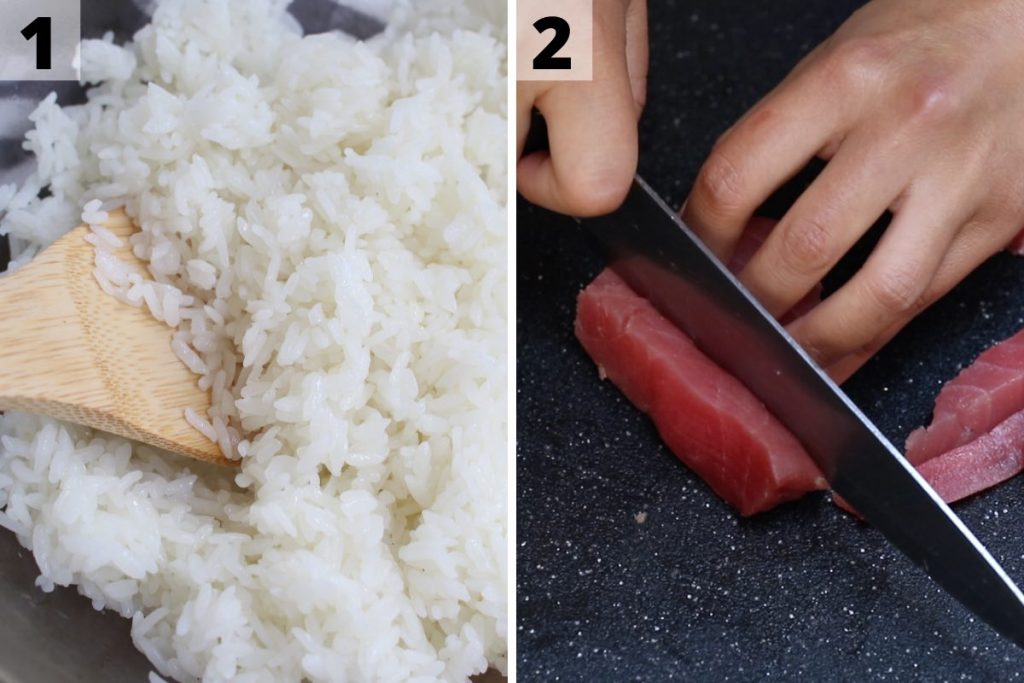
Step 1: Cook and season the sushi rice. Use Japanese short-grain rice and cook with a 1:1 ratio of rice to water so the grains stay firm. Once cooked, transfer to a large bowl, fan it as it cools, and fold in the sushi vinegar mixture while the rice is still warm. Cover with a damp cloth.
Step 2: Prepare the spicy tuna mixture. Slice the sashimi-grade tuna into ½-inch thick strips. Gently toss with sriracha, a small amount of spicy mayo, and a few drops of sesame oil. Do not over-mix — you want to coat the strips, not crush them.
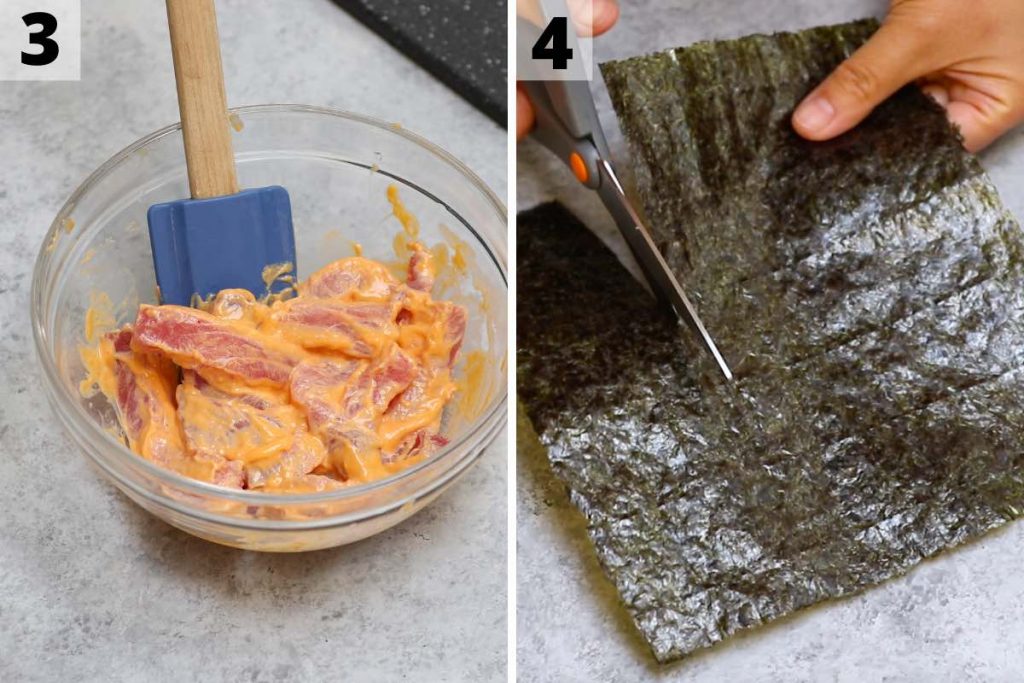
Step 3: Set up your rolling station. Place the bamboo mat on a flat surface and cover it with a sheet of plastic wrap. Set out a small bowl of tezu (1/4 cup water + 2 tsp rice vinegar) to keep the rice from sticking to your hands.
Step 4: Lay the nori and spread the rice. Place a half sheet of nori, shiny side down, on the plastic-wrapped mat. Wet your fingers in the tezu, then spread about 3/4 cup of seasoned sushi rice evenly over the nori. Sprinkle with sesame seeds. Flip the entire sheet over so the rice side faces down.
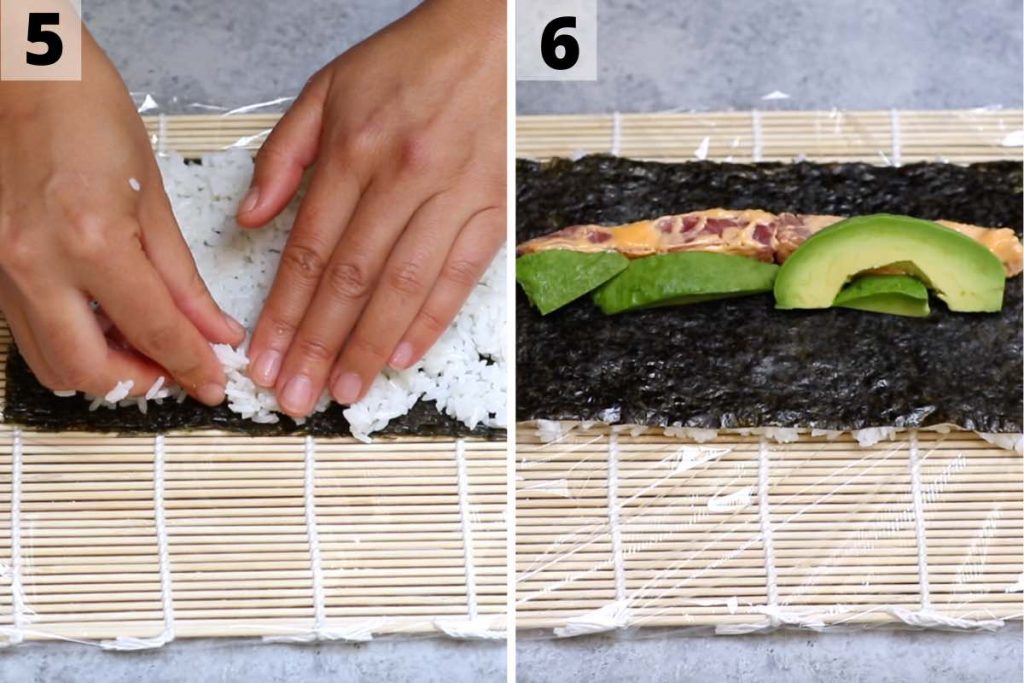
Step 5: Add the fillings. Line the spicy tuna mixture in a thin row along the bottom edge of the nori. Add a few thin slices of avocado alongside it. Resist the urge to overfill — less is more for a tight roll.
Step 6: Roll it up. Lift the bottom edge of the mat with both thumbs while holding the filling in place with your fingers. Roll forward firmly, tucking the nori over the filling. Pull the mat back as you go, maintaining gentle but firm pressure throughout.
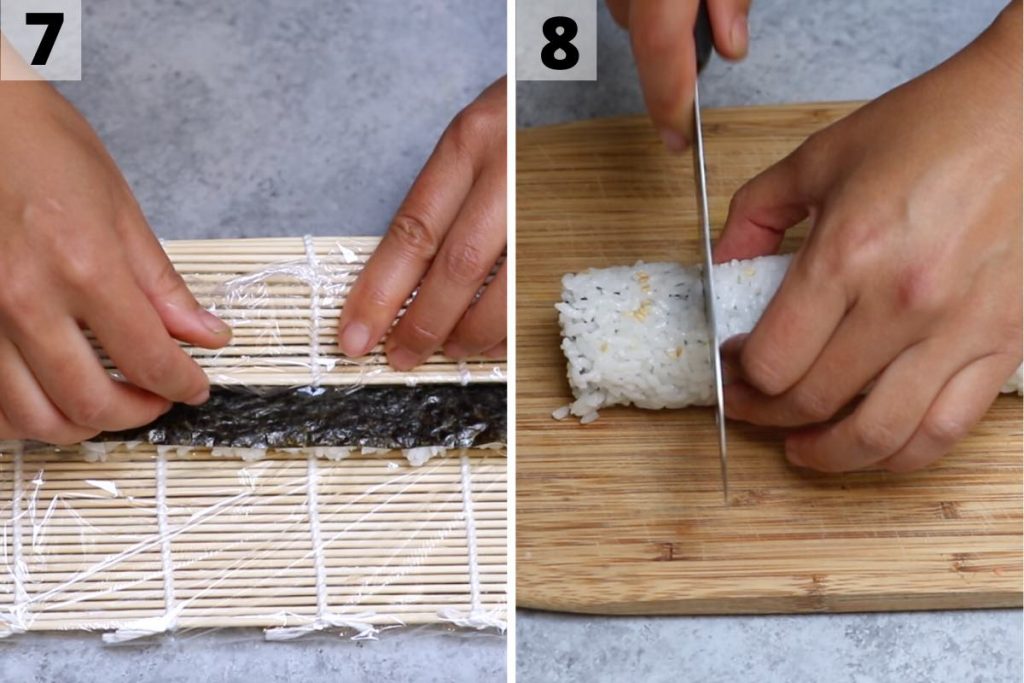
Step 7: Shape and slice. Once the roll is complete, press gently through the mat to set the shape. Use a very sharp knife to cut the roll in half, then each half into 3 pieces (6 pieces total per roll). Wipe the knife with a damp cloth between cuts to keep the rice from tearing.
Step 8: Garnish and serve. Add a small dollop of spicy mayo on top of each piece and garnish with sliced green onions or sesame seeds. Serve immediately with pickled ginger, wasabi, and soy sauce on the side.
Izzy’s Tips
- Use sushi-grade tuna. This is non-negotiable for a raw preparation. Look for labels that say “sushi-grade” or “sashimi-grade” — your local Japanese grocery store or a reputable fish market is your best bet.
- Don’t skip the tezu. The vinegared hand-dipping water prevents the rice from sticking to your fingers and makes spreading much easier. Mix 1/4 cup water with 2 teaspoons rice vinegar in a small bowl.
- Room temperature rice is key. Rice that is too hot will tear the nori; rice that is too cold will be stiff and crack when rolling. Let it cool to just above room temperature before using.
- Roll firmly but gently. Press as you roll to keep the shape tight, but don’t squeeze so hard that the filling pops out.
- Use a very sharp knife. A sharp knife slices cleanly through the roll without compressing it. Wipe the blade with a damp cloth between each cut.
- Make it ahead in parts. You can season the tuna mixture and cook the rice up to a few hours in advance. Assemble and roll just before serving — sushi is always best fresh.
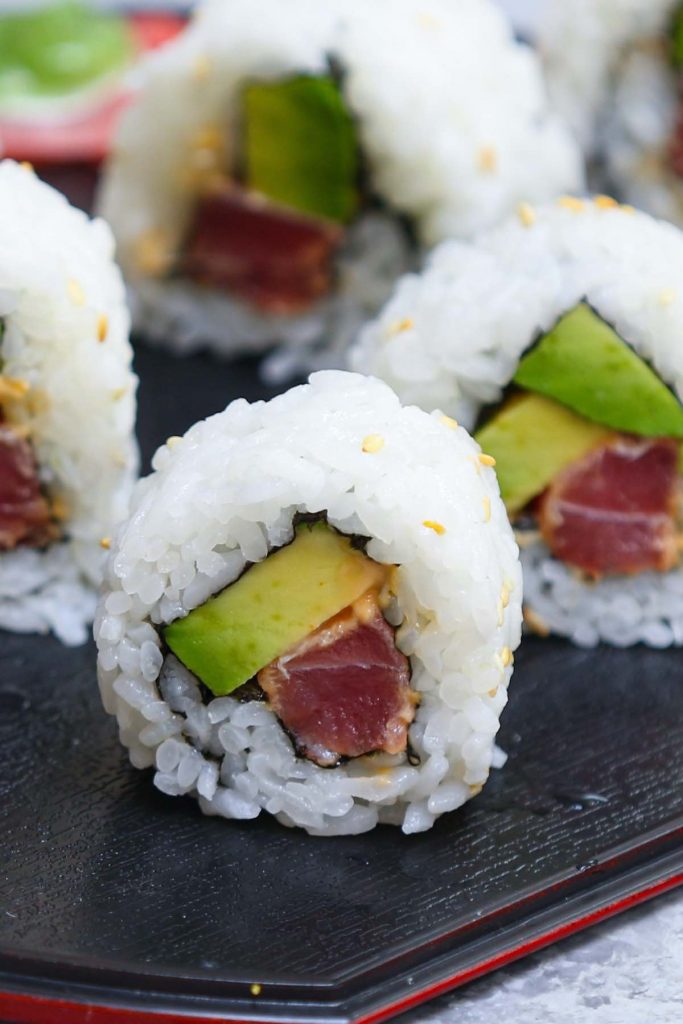
Spicy Tuna Roll Variations
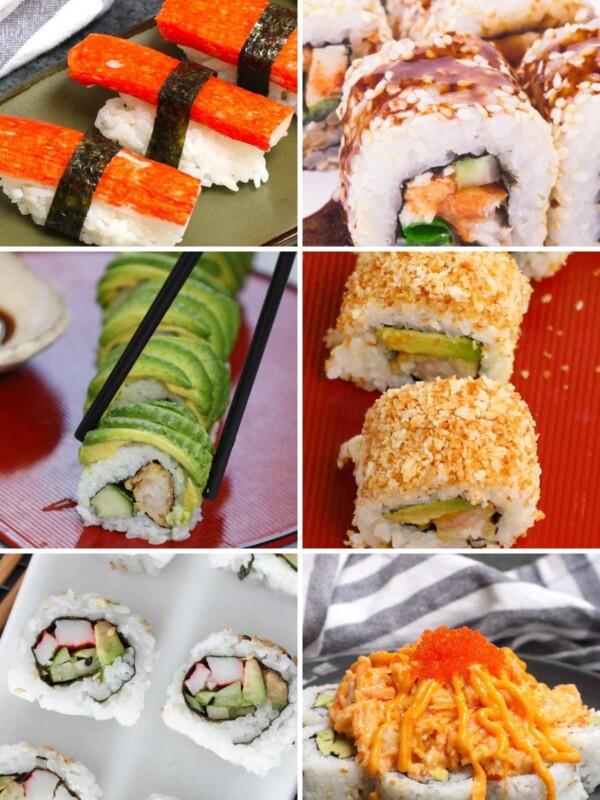
Once you master the basic roll, there are so many delicious ways to customize it. Here are six of our favorite spicy tuna roll variations:
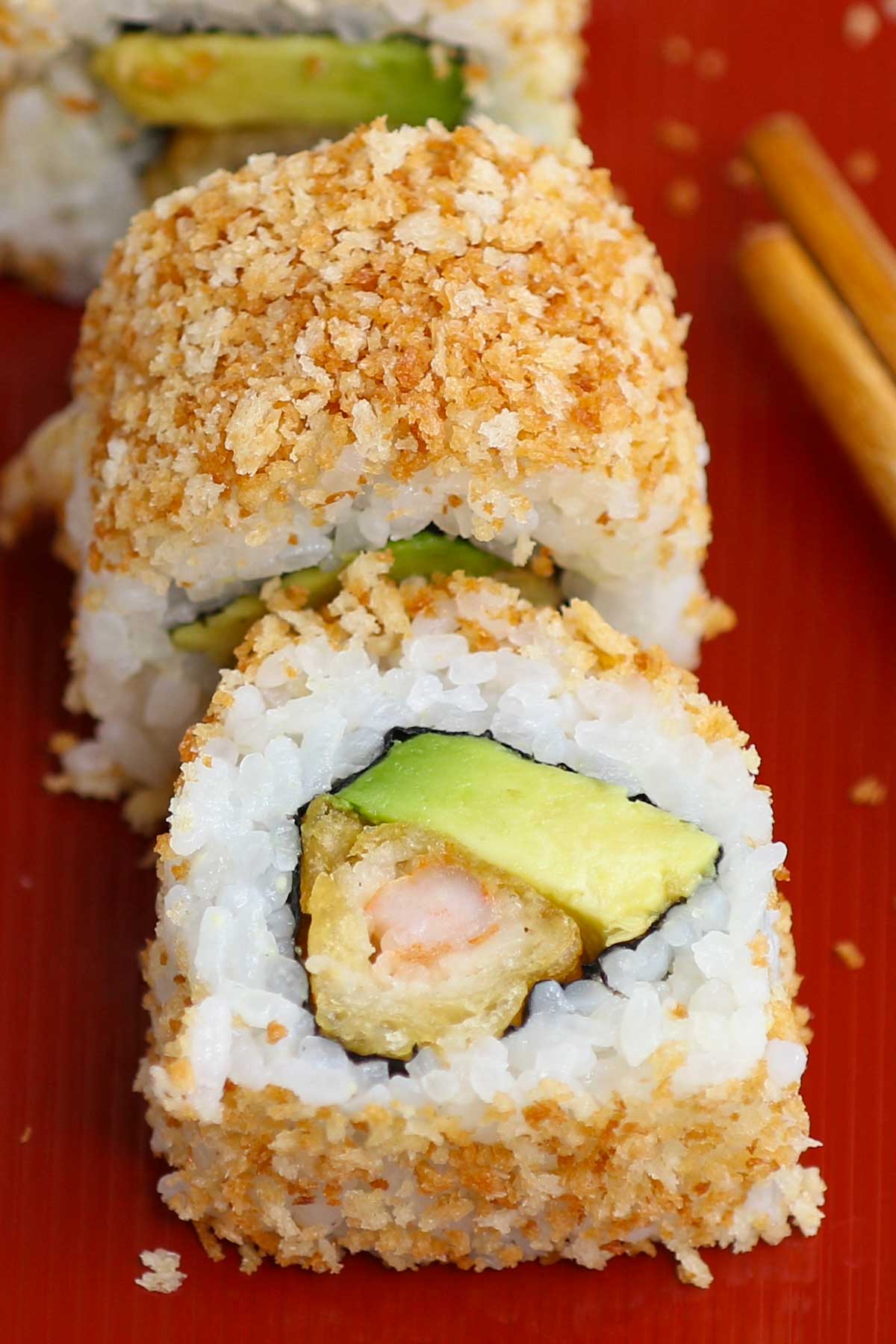
Crunchy Spicy Tuna Roll
Add a strip of panko breadcrumbs or crushed tempura flakes on top of the rice before rolling. The result is a satisfying crunch with every bite — a popular upgrade you’ll find at many Japanese-American sushi bars.
Spicy Tuna Roll with Cucumber
Swap avocado for julienned cucumber for a lighter, crispier roll. Cucumber adds a cool, refreshing contrast to the heat of the tuna mixture. You can also add both cucumber and avocado for extra filling.
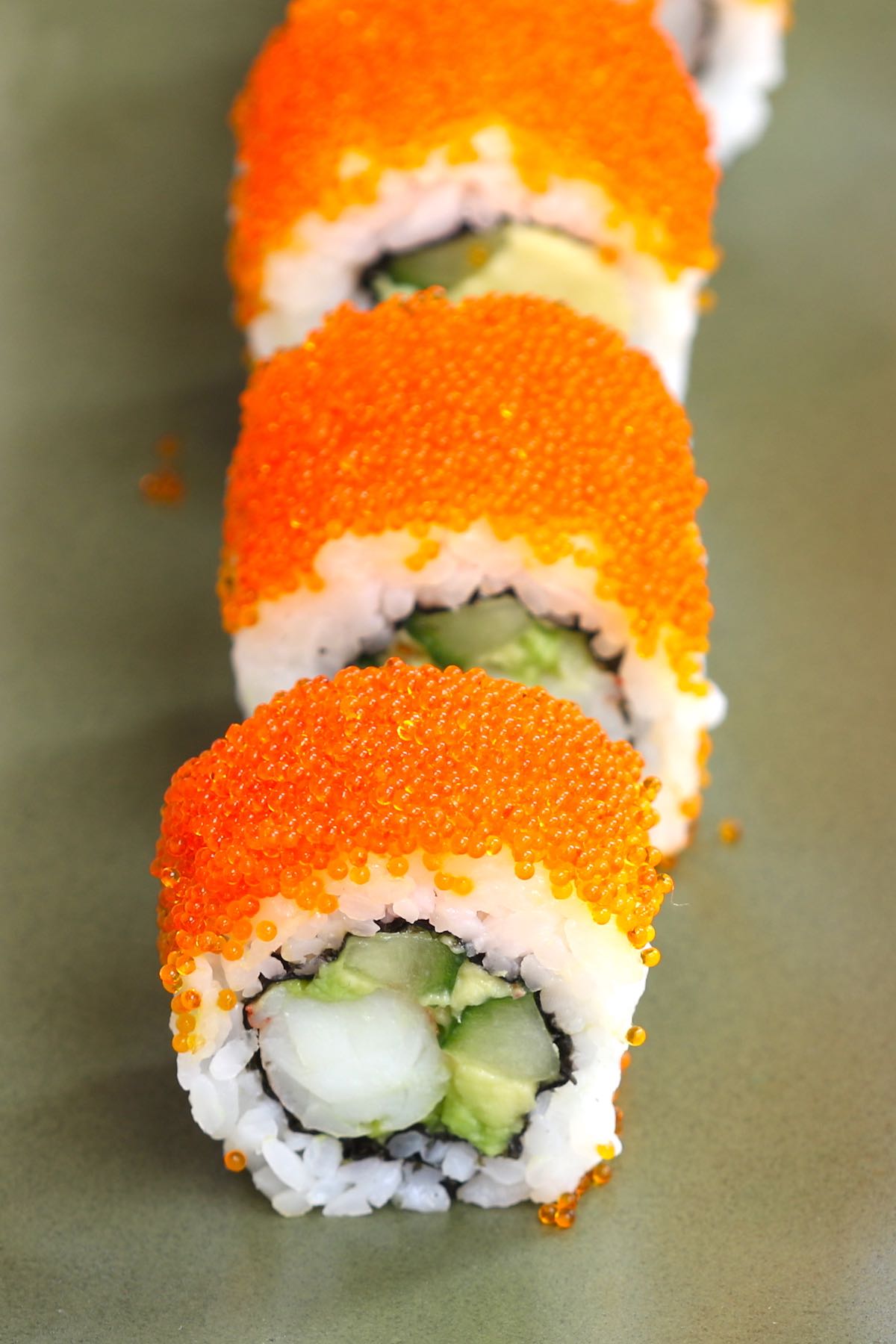
Spicy Tuna Roll with Tobiko Topping
Finish each piece with a small spoonful of tobiko sauce — made with flying fish roe, sriracha, and Japanese mayo. The tiny fish eggs add a pop of briny, ocean-fresh flavor and beautiful orange color that takes the roll from homemade to restaurant-quality.
Spicy Tuna Hand Roll (Temaki)
Skip the bamboo mat entirely and roll the filling into a hand roll cone. Cut a nori sheet in half, add a small scoop of rice, the tuna mixture, and avocado, then roll into a cone shape. Hand rolls are even faster to make and are a fun, interactive option for dinner parties.
What to Serve with Spicy Tuna Roll
Spicy tuna rolls are delicious on their own, but they shine even more as part of a full sushi spread. Here are the best accompaniments:
- Miso soup — A classic pairing. The warm, umami-rich broth perfectly balances the bold flavors of the roll.
- Pickled ginger (gari) — Eaten between bites to cleanse the palate. Buy it at any Asian grocery store or online.
- Wasabi and soy sauce — Serve on the side for dipping. Mix a small amount of wasabi into soy sauce if you like extra heat.
- Edamame — A light, protein-rich appetizer that sets the stage for sushi. Sprinkle with flaky sea salt.
- Japanese cucumber salad (sunomono) — A refreshing side dish with a sweet vinegar dressing that cuts through the richness of the roll.
- Other sushi rolls — Round out your spread with Boston Roll for a lighter, cooked option, or Dragon Roll for something showstopping.
How to Store Spicy Tuna Roll
Spicy tuna rolls are best enjoyed immediately after making them. Raw tuna and sushi rice both deteriorate quickly in the refrigerator.
If you have leftovers, wrap them tightly in plastic wrap and place in an airtight container. Store in the coldest part of the refrigerator and consume within 24 hours. The rice will firm up and the tuna will lose some of its fresh texture, but it will still taste good. Do not freeze sushi rolls — the texture of the rice and fish breaks down completely when frozen.
Frequently Asked Questions
How many calories are in a spicy tuna roll?
A typical spicy tuna roll (6 pieces) contains approximately 290 to 350 calories, depending on the amount of rice and sauce used. Tuna itself is very lean — most of the calories come from the sushi rice and spicy mayo. Using brown rice adds fiber and a slightly lower glycemic impact.
What does spicy tuna roll taste like?
Spicy tuna roll has a bold, layered flavor profile: the tuna is mild and buttery with a texture similar to rare steak, the sriracha mayo brings creamy heat, the sushi rice adds a slight tang from the vinegar, and the nori provides a savory, ocean-fresh backdrop. The avocado adds richness and cools the heat slightly. The overall experience is spicy, creamy, savory, and satisfying.
Why does my spicy tuna roll fall apart?
The most common culprits are rice that is too wet, too dry, or overfilling. Make sure your sushi rice cools to just below room temperature before rolling — hot or cold rice won’t stick properly. Spread it in a thin, even layer without pressing too hard. Use the bamboo mat to apply firm, even pressure as you roll, and keep the roll tight. When cutting, use a very sharp knife in one smooth motion, wiping the blade with a damp cloth between each slice.
Can I make spicy tuna rolls without a bamboo mat?
Yes! Lay a sheet of plastic wrap on a flat, clean surface, place your nori sheet on top, then add the rice and fillings as usual. Use the plastic wrap to roll and shape the sushi, pressing firmly as you go. The roll won’t be as perfectly round as one shaped with a bamboo mat, but it works well — and the plastic wrap makes cleanup easier too. A thin kitchen towel can also work as a substitute in a pinch.
Spicy Tuna Roll Recipe
Equipment
- Rice Cooker or Pot
Ingredients
For Sushi Rice
- 1 1/2 cup sushi rice, Japanese short grain rice
- 1 ½ cup water
- 1 ½ tablespoons sushi vinegar, or mixing 1 tablespoons rice vinegar, 1/2 tablespoon sugar, and 1/2 teaspoon salt
For Spicy Tuna Rolls
- 4 oz sashimi-grade tuna
- 2 teaspoons mayonnaise
- 1 teaspoon sriracha sauce
- 3 sheets nori, seaweed
- 1 avocado, ripe
- 2 tablespoons white sesame seeds
Optional for Serving:
- soy sauce
- wasabi paste
- pickled ginger
Instructions
- Wash the rice with cold water until the water runs clear. Add the rice and water to the rice cooker and cook according to the instructions. Once cooked, transfer the hot rice to a large bowl and let it cool slightly. While still warm, fold in the sushi vinegar (or the mixture of rice vinegar, sugar, and salt).
- Slice the sashimi-grade tuna into ½-inch thick strips.
- In a small bowl, whisk together the mayonnaise and sriracha sauce. Taste and adjust the sriracha to your preferred heat level.
- Add the tuna strips to the spicy mayo bowl. Gently toss to coat. Set aside.
- Lay the bamboo mat with an optional piece of plastic wrap on top (This will make clean up easier).
- Cut off 1/3 of the nori sheet using kitchen scissors.
- Place the remaining nori sheet towards the bottom of the mat, shiny side down.
- Take 3/4 cup of cooked rice and evenly spread over nori. You can wet your fingers in the tezu vinegar water* to prevent sticking)
- Sprinkle with sesame seeds evenly on top. (I recommend toasting the sesame seeds first. Simply add the to a dry skillet on medium heat. Spread them evenly in the skillet and cook for about 5 minutes until lightly browned.)
- Flip the rice-covered nori sheet so the rice side faces down on the mat.
- Place tuna strips and sliced avocado on top of the nori.
- Place your thumbs underneath the bamboo mat and lift the bottom edge up and over the filling. Roll forward firmly, applying gentle but even pressure throughout. Pull the mat back as you roll until the ends meet.
- Once the roll is closed, press the mat firmly around it to shape into a tight, even cylinder.
- Transfer the roll to a cutting board. Using a very sharp knife, cut the roll in half, then cut each half into 4 pieces for 8 pieces per roll. Wipe the blade with a damp cloth between each cut to keep the rice from tearing.
- Serve immediately with soy sauce, pickled ginger, and wasabi paste.
Video
Notes
- Great sushi rolls start with the right rice. Use high-quality Japanese short-grain rice — when cooked properly it stays fluffy even after tight rolling.
- *Tezu dipping water: Mix 1/4 cup water with 2 teaspoons rice vinegar. Dip your fingers before spreading rice to prevent sticking.
- Spicy tuna rolls are best eaten the same day. Store leftovers in an airtight container in the refrigerator and eat within 24 hours.
Nutrition
Nutrition information provided is an estimate only and will vary based on ingredient brands and cooking methods used.
This post may contain affiliate links. Please read my disclosure policy.