Bean Thread Noodles Recipe

on Sep 20, 2022
I keep a stash of dried bean thread noodles in my pantry year-round. They’re my secret to a 30-minute stir-fry that tastes restaurant-quality—the kind my family requests every other week.
This is how my mom taught me to cook noodles growing up—quick sear on the chicken, vegetables hitting the hot pan while it’s still sizzling, scrambled eggs folded in on the side. The noodles are already tender from soaking, so you’re just tossing everything together in a sauce that hits three flavor layers: salty (soy and fish sauce), deep umami (oyster sauce), and a whisper of sweetness. It’s the Chinese way, not Thai—though the noodles work for both.
Here’s what I’ll teach you: exactly how long to soak these noodles so they never clump, how to drain them quickly and save just a splash of that soaking water—the move that keeps them perfectly silky, and the one stirring mistake that ruins the whole dish. This version uses chicken breast and fresh vegetables—nothing fancy, all practical kitchen technique.
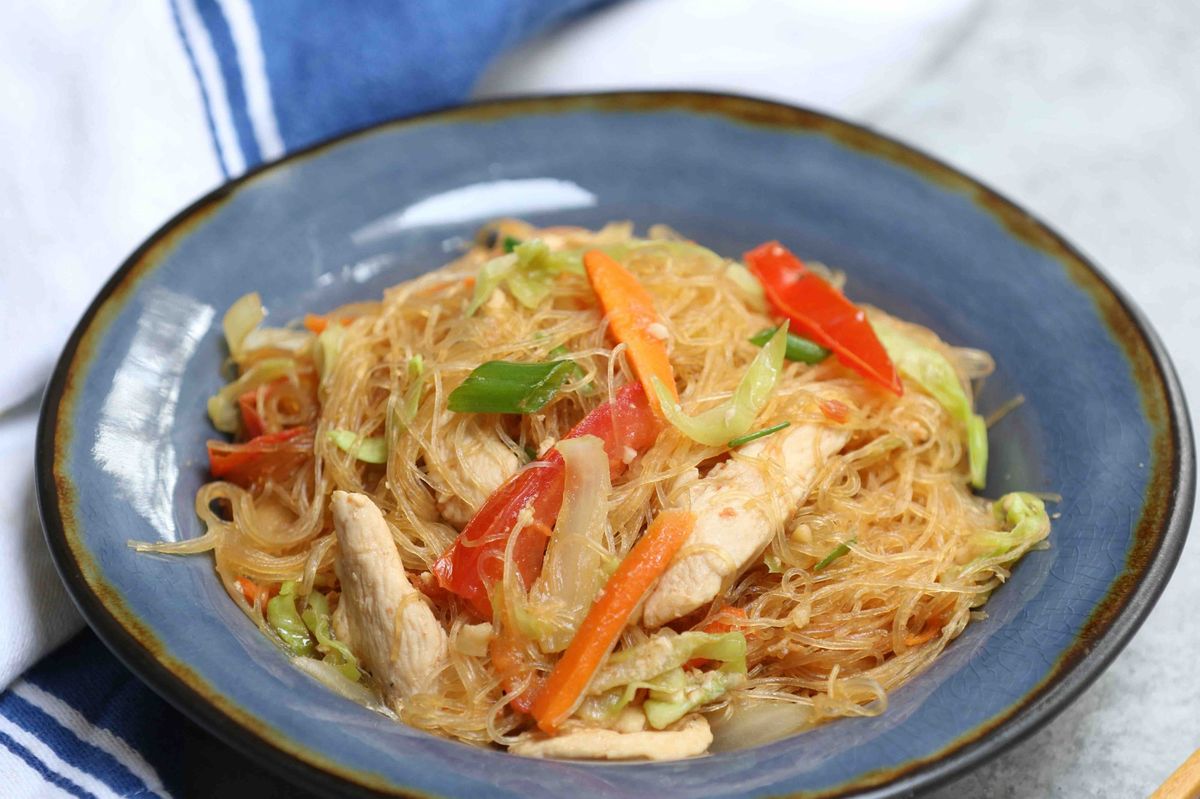
Bean Thread Noodles Ingredients
This recipe calls for just a handful of components. Each one earns its place.
- Bean thread noodles (also called glass noodles, cellophane noodles, or mung bean vermicelli). These are made from mung bean starch and water, which is why they cook so fast and soak in minutes flat. You’ll find them dried in bundles at any Asian market, or Amazon carries them too.
- Chicken breast — boneless and skinless, cut into thin strips.
- Eggs — These scramble on the side of the pan and add richness and protein to every single bite.
- Onion — It softens underneath the other vegetables, no raw crunch.
- Garlic — When you add it, the pan should sizzle immediately. That sizzle tells you the oil is hot enough.
- Carrots — They stay a little crisp even when sautéed.
- Tomato — Remove the seeds so the liquid doesn’t make the dish soggy.
- Cabbage — This adds volume and sweetness.
- Green onions — for garnish at the end. Fresh. Bright. Essential.
- Vegetable oil — divided between cooking the chicken and sautéing the vegetables.
- White pepper—to taste. A pinch at the end. It’s subtler than black pepper.
- Sauce – made of soy suace, sugar, fish sauce, oyster sauce and water.
Exact amounts are in the recipe card below.
How Long Do You Soak Bean Thread Noodles?
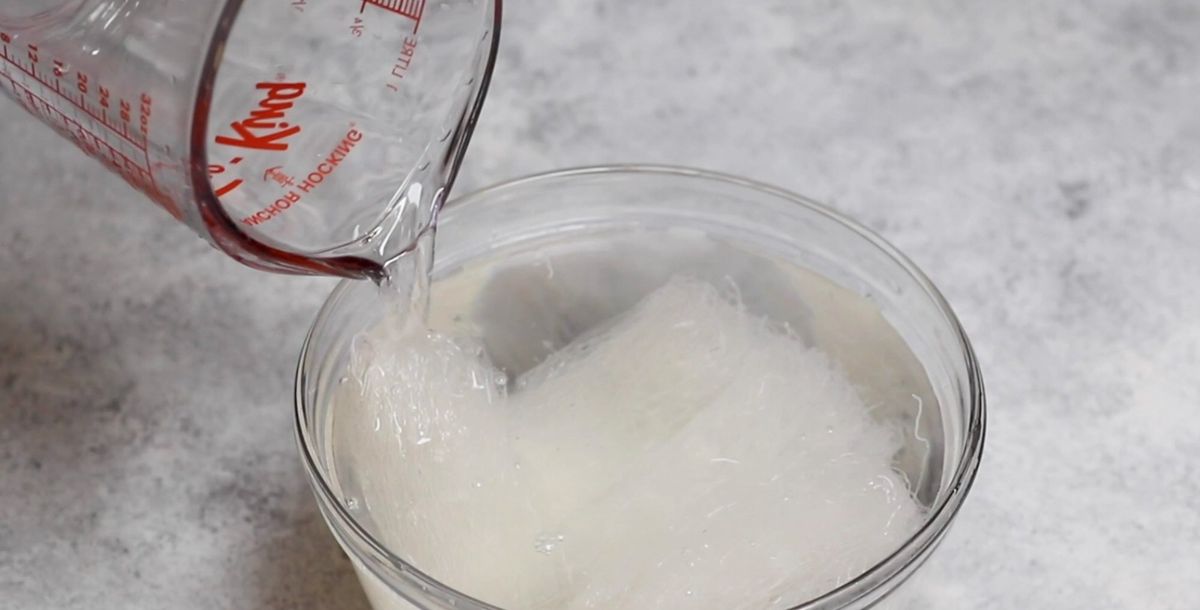
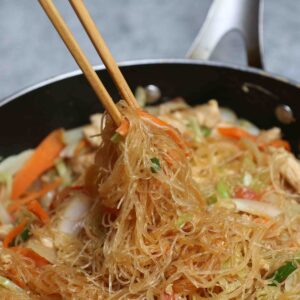
Soak them in warm water (not boiling) for about 5–8 minutes. They should feel tender but still have a tiny bit of firmness—not mushy. The exact time depends on the brand and thickness. Here’s the critical trick I learned from testing batches: drain the noodles quickly, keeping just a small splash of that soaking water. Add them to the pan. That bit of starchy liquid is what keeps them separated and silky. Once they hit the sauce, they’ll absorb the liquid and soften completely to the perfect tender-chewy texture.
How to Make Bean Thread Noodles
Fifteen minutes from cold pan to table. Sometimes less.
Step 1: Soak the noodles. Pour dried bean thread noodles into a bowl of warm water. Let them sit for 5–8 minutes until flexible and soft. Drain quickly—but save a splash of that soaking water. Toss with a teaspoon of oil so they don’t stick together. Trim with kitchen shears into shorter lengths, about 3–4 inches. Shorter noodles are easier to eat and help the sauce coat every bite evenly.
Step 2: Cook the chicken. Heat oil in a large wok or skillet over medium-high heat. Once it shimmers, add the chicken strips and cook for about 6 minutes, stirring occasionally, until cooked through. No pink inside. Remove to a plate and set aside.
Step 3: Sauté the vegetables. Add the remaining oil to the same pan. Add the minced garlic first—you’ll hear it sizzle. That sizzle tells you everything is hot enough. Cook for about 1 minute until fragrant, then add the sliced onion, julienned carrots, diced tomato (seeds removed), and shredded cabbage. Stir-fry for 2–3 minutes until the vegetables start to soften but still have a little bite.
Step 4: Scramble the eggs. Push the vegetables to one side of the pan. Pour the beaten eggs into the empty space. Let them set for about 10–15 seconds, then scramble gently with a spatula, breaking into small curds. Once mostly cooked through (still slightly wet is okay), mix into the vegetables.
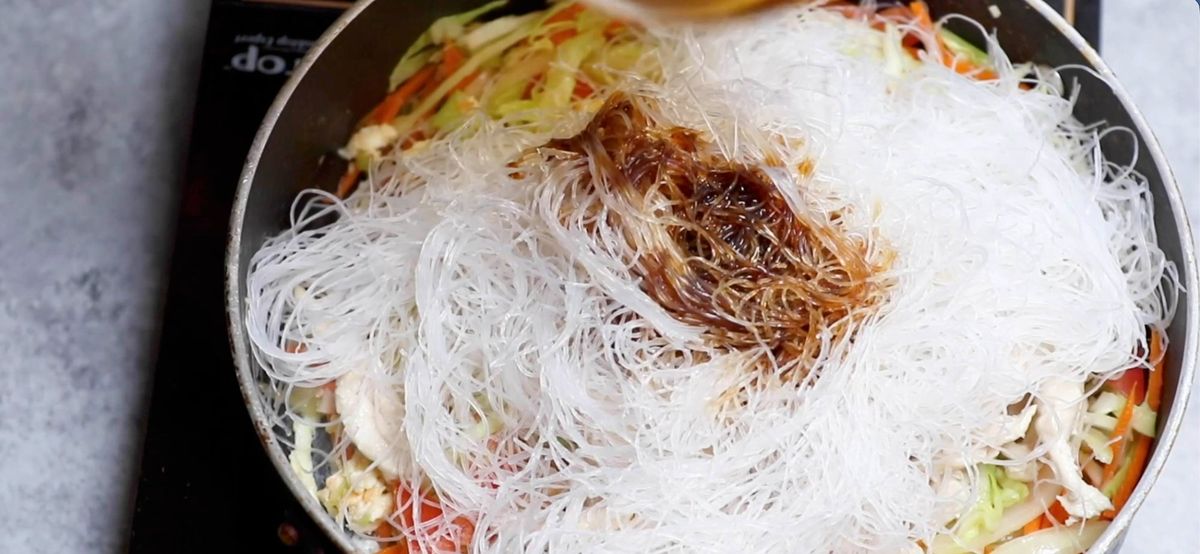
Step 5: Add noodles and sauce. Return the cooked chicken to the pan. Add the noodles—keep a little of that soaking water clinging to them. It’s not a mistake. Pour in the sauce and toss everything together over the heat for 1–2 minutes. Do NOT stir-fry longer than that or the noodles turn clumpy and lose their delicate, silky texture. Everything should be heated through and coated in sauce.
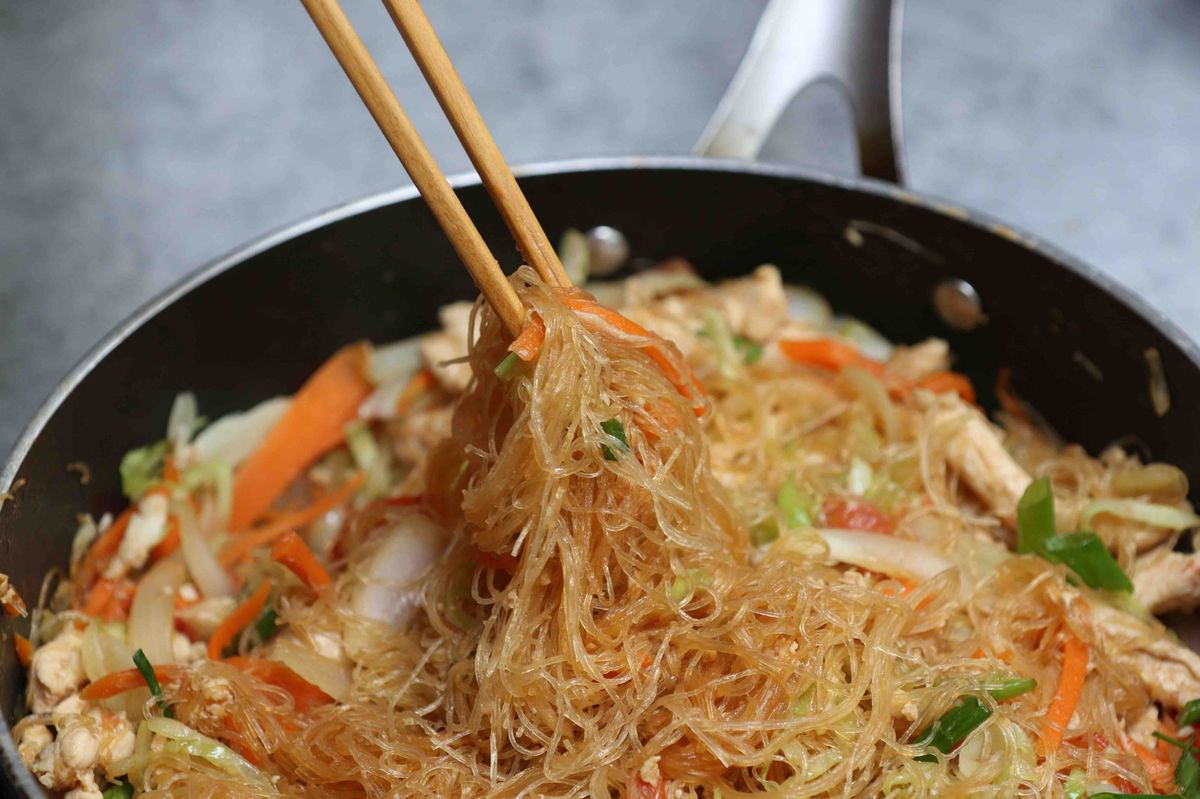
Step 6: Finish and serve. Turn off the heat. Taste for salt and white pepper—add a pinch if needed. Divide into bowls and garnish with sliced green onions. Serve immediately while hot.
Glass Noodles vs. Rice Noodles
Glass noodles are just another name for bean thread noodles—same thing, different labels. You’ll also see them called cellophane noodles or mung bean vermicelli. They’re all made from mung bean starch and turn slightly translucent when cooked. Rice noodles are a separate product made from rice flour. They stay opaque and have a chewier bite. If a recipe calls for glass noodles, bean thread noodles, or cellophane noodles, grab any of those—they’re interchangeable. Rice noodles are not a substitute here.
Izzy’s Tips for the Best Bean Thread Noodles
- I drain the noodles quickly and save just a small splash of that soaking water to add back when cooking. That bit of starchy liquid is what keeps them from clumping in the pan.
- Keep the stir-fry time short once the noodles go in. You have about 1–2 minutes max. Anything longer and you’re headed toward mush.
- Make it gluten-free easily. Use tamari instead of regular soy sauce. Check your fish sauce and oyster sauce labels—most brands are naturally gluten-free, but not all.
- Leftovers keep in the fridge for 1–2 days max. Reheat on the stovetop in a skillet with a splash of oil or broth to refresh the noodles. Do NOT microwave them or they’ll turn into a solid clump.
- Check the package weight before buying. Bundle sizes vary wildly by brand—some sell 4-ounce bundles, others 6-ounce. One standard bundle (what this recipe uses) is about 6 ounces.
What to Serve With Bean Thread Noodles
This is a complete one-pan meal on its own. But if you want to add something on the side, here are some pairings from my Asian recipe collection:
- Lo mein if you want a second noodle dish (or for variety on another night)
- Spicy tuna roll as an elegant appetizer to start the meal
- Tobiko sauce on the side for anyone who wants something richer and creamier
- Peking ravioli for a crispy contrast to the soft noodles
This dish disappears from our table in about four minutes flat—I’ve learned to make extra if anyone’s bringing a friend. The first time I made it, I panicked thinking the soaking water would ruin everything. (It didn’t—it saved it.) Now I’m the one telling everyone else to drain quickly and save that small splash. Tag me @izzycookingofficial when you make yours. Let me know if your family demolished theirs just as fast!
Bean Thread Noodles Recipe
Ingredients
- 6 ounces dried bean thread noodles
- 2 tablespoons vegetable oil, divided
- 1 pound boneless, skinless chicken breasts, sliced into thin strips
- 2 cloves garlic, minced
- 1/2 medium onion, thinly sliced
- 1/2 cup carrots, thinly sliced
- 1 medium tomato, seeds removed, thinly sliced
- 2 cups cabbage, thinly sliced
- ground white pepper, to taste
- 2 eggs, beaten
- 2 green onions, chopped
For The Sauce
- 2 tablespoons soy sauce, low-sodium recommended
- 2 tablespoons sugar
- 1 tablespoon fish sauce
- 3 tablespoons oyster sauce
- 1/4 cup water
Instructions
- Soak the noodles in room temperature water according to the instructions on the package. Transfer them to a colander to drain, then cut the noodles into shorter pieces and toss them with oil to prevent them from sticking.
- Mix all of the ingredients for the sauce. Set aside.
- Heat 1 tablespoon of oil in a non-stick skillet or wok over medium-high heat. Add the chicken and sauté for about 6 minutes until cooked. Transfer the chicken to a plate.
- Add the remaining oil to the skillet. Add the garlic and sauté for about 1 minute, or until fragrant. Add the onions, carrots, tomato, cabbage, and white pepper to the skillet and stir-fry for about 2-3 minutes.
- Move the vegetables to one side of the pan and add the beaten eggs to the empty side. Scramble the eggs until cooked.
- Add the chicken, noodles, and sauce back to the skillet. Stir-fry until the noodles are soft and all the ingredients are combined and coated in the sauce.
- Serve sprinkled with chopped green onions.
Notes
- Add noodles directly from soaking water without draining—that starchy liquid prevents clumping and helps them stay tender. It’s not a mistake.
- Stir-fry only 1–2 minutes after noodles go in or they turn clumpy. Speed is key.
- Make it gluten-free easily: use tamari instead of soy sauce, and check oyster sauce and fish sauce labels (most brands are naturally gluten-free).
- Leftovers store 1–2 days in the fridge. Reheat on the stovetop with a splash of oil or broth—never microwave or they’ll clump into a solid mass.
- Bundle sizes vary by brand; check your package weight. One standard bundle is about 6 ounces.
Nutrition information provided is an estimate only and will vary based on ingredient brands and cooking methods used.
This post may contain affiliate links. Please read my disclosure policy.


Hey Izzy – first off, this is the closest recipe to my favorite dish from Penny’s Noodle House in Chicago and I was thrilled to make this recipe! There is an ingredient that I’m wondering could help me fill the blank on a taste that Penny’s recipe had – there was a deeper umami/smokiness that came from the dish and not knowing enough about Thai/Vietnamese ingredients, I’m left wondering what it could be – any ideas?